Typical applications
- Industrial sheds and equipment platforms
- Trusses, towers and secondary framing
- Commercial and institutional buildings
- General fabrication and support structures

Angles, channels, beams and flats for dependable load-bearing frames and everyday fabrication.
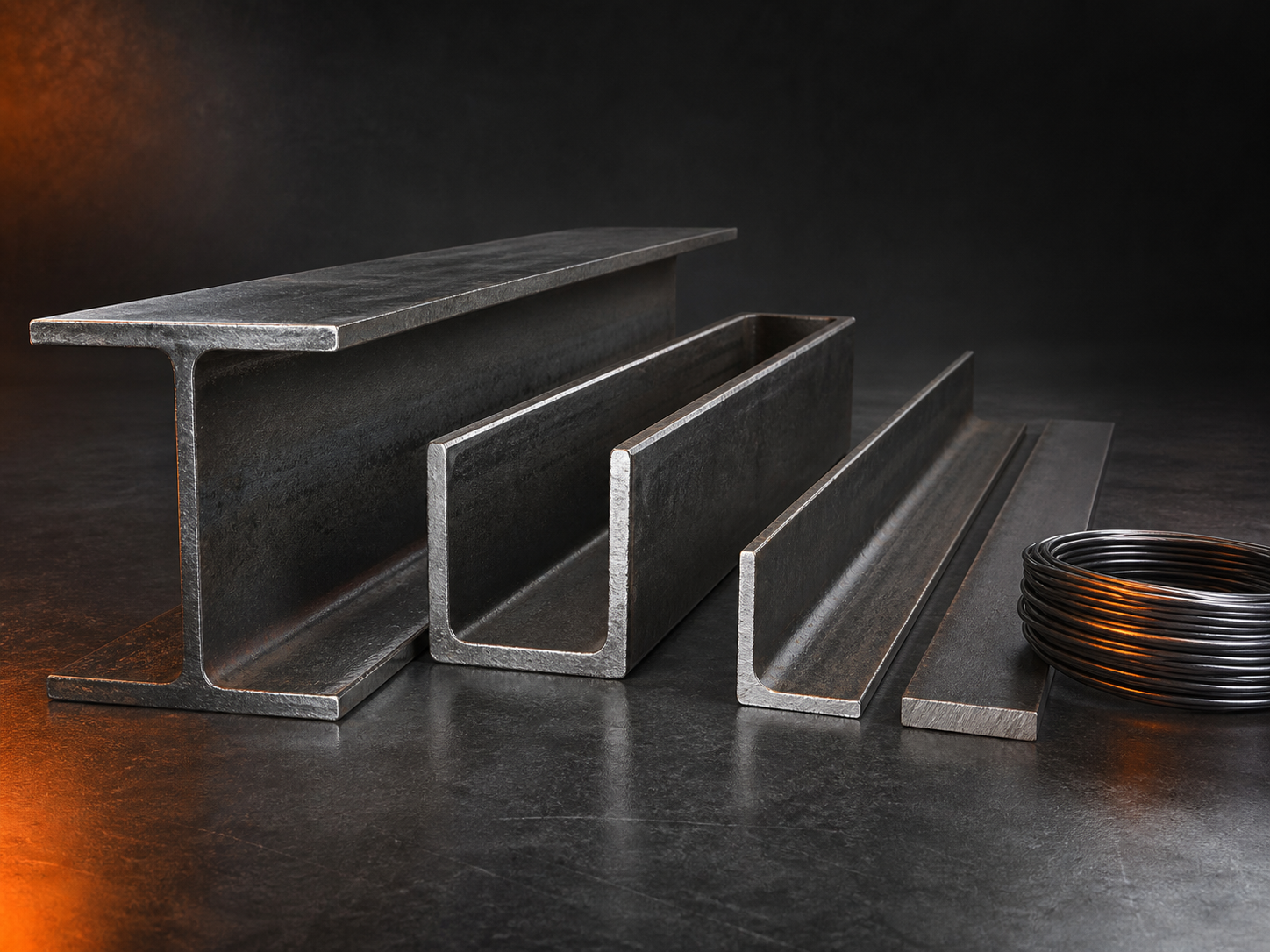
Structural sections create the primary and secondary frames used across buildings, platforms and fabricated assemblies. Section geometry, grade, span, connection method and exposure conditions should be resolved together.
Final selection belongs to the project specification and engineer. Confirm these inputs before placing an order.
Record this requirement clearly in the enquiry, drawings or material schedule.
Record this requirement clearly in the enquiry, drawings or material schedule.
Record this requirement clearly in the enquiry, drawings or material schedule.
Record this requirement clearly in the enquiry, drawings or material schedule.
A simplified process overview. The exact production and inspection route depends on the ordered product and applicable standard.
The required grade and governing dimensional standard are confirmed.
Steel is rolled into the selected section with controlled geometry.
Straightness, section dimensions and surface condition are reviewed.
Lengths, quantities and handling requirements are aligned to the project.
Practical answers for early product and procurement discussions.
The structural designer selects the section after checking load, span, lateral stability, connection and serviceability.
Availability depends on stock and processing capability. State every required length clearly in the enquiry.
Confirm the grade, applicable standard and any material documentation required by the project specification.
Add the confirmed grade or material, dimensions, quantity, delivery location and required date. The tool copies the brief without sending personal data.